In the Service of Democracy, Peace and Development
About Us
Democracy can survive only with a democratically-minded population.
The Hanns Seidel Foundation's mission
This lesson, learned from the failure of the first German Republic, the Weimar Republic, led the Federal Republic of Germany to establish political foundations. As an important part of political culture, these foundations would henceforth serve as a lasting and profound anchor for democratic awareness in our country. Former German President Roman Herzog accurately characterised them as “schools of democratic thought and action, testbeds for civil courage and common sense that bestow upon us the ethical principles without which our political system cannot function.” Today, six political foundations operate in Germany, spanning the political spectrum. Each is closely aligned with one party. Their legitimacy comes from nearly complete state funding from the German parliament. Their conscious and intentional coexistence is an exercise in pluralism founded upon on a basic consensus on liberal democratic principles. “Democracy,” Herzog also said, “means example as well as instruction.”
The Hanns Seidel Foundation, named after the former Bavarian prime minister and CSU chairman, has belonged to this family of foundations since 1967. It is politically aligned with the Christian Social Union and engages in political education with the aim of promoting the democratic and civic education of the German people on Christian foundations. Its educational programmes extend beyond party boundaries and are open to all interested citizens. Its commitment to democracy, peace, and development abroad also rests on these foundations. In addition, the foundation’s practical actions focus on standards of human dignity and tolerance, freedom and responsibility, solidarity and sustainability, equality of opportunity and intergenerational justice, and subsidiarity as a principle of responsibility and structure.
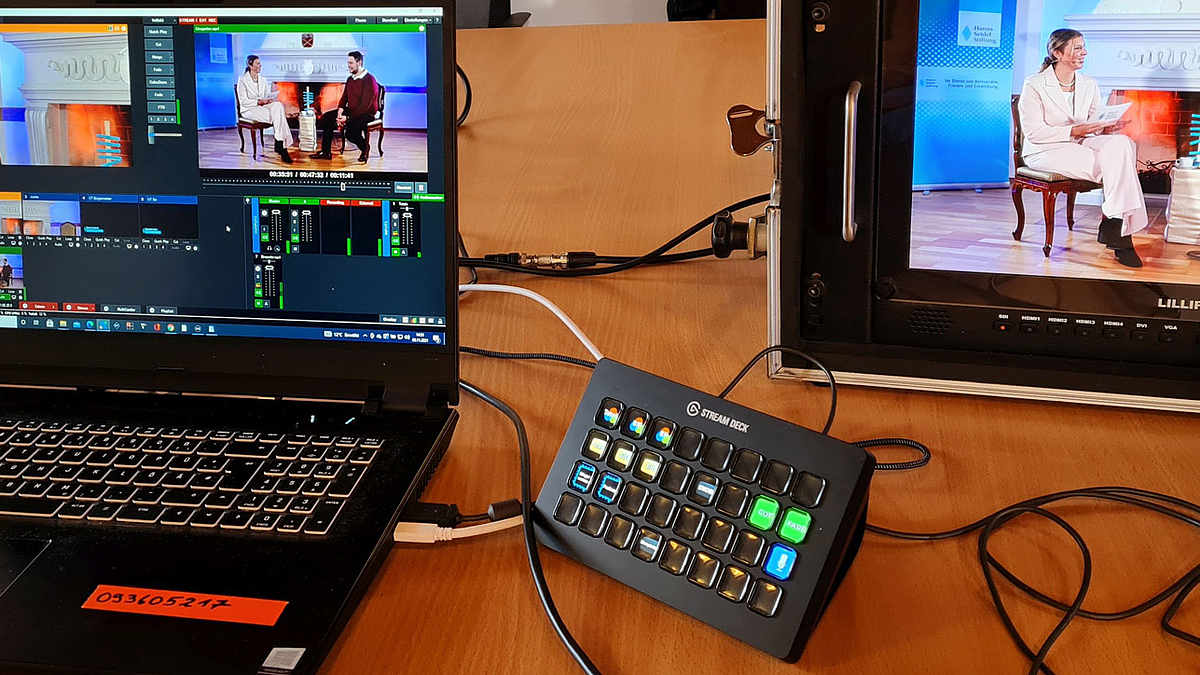
Mission and objectives must be pursued consistently. Structures must be reviewed, processes corrected, and new formats developed and introduced. Digitalisation is also becoming increasingly important for political education. We are very well positioned here. Online seminars are no substitute for face-to-face seminars, but they complement our range of services decisively. This enables us to generate new reach to young target groups. Participation in the socio-political debate, dialogue with various interest groups, and the development of solution strategies are among our tasks – which we fulfill nationally and internationally, always in the service of democracy, peace, and development. This brochure provides a compact overview of the Hanns Seidel Foundation’s wide-ranging activities.
Fields of activity
The conceptual and operational work of the Hanns Seidel Foundation is primarily concentrated in five departments. Whilst the Academy for Politics and Current Affairs focuses on current trends and scholarly research, the Institute for Political Education offers seminars on a number of different topics. The Institute for Scholarship Programmes runs programmes that benefit talented, socially committed academics. The Institute for International Cooperation operates and evaluates development cooperation projects. The main focus here is good governance, democracy-building, help for self-help, and sustainable development. The Institute for European and Transatlantic Dialogue sees itself as a bridge-builder and mediator within Europe and with the USA and Canada.
The Central Services supports these five departments as a service provider. The Banz Monastery Educational Centre and the Conference Centre at the foundation’s headquarters in Munich are places to meet and engage in dialogue. The overarching guidelines governing the foundation’s work include the relationship between citizens and the state and the tension between globalisation and regionalisation. Here too, the focus is on the new role of Germany and Europe as a result of international conflicts and migration, the impact of the increasing individualisation of society and questions of responsibility for future generations.
Active Worldwide
For almost 50 years, the Hanns Seidel Foundation has been involved in international cooperation and supports around 90 projects in 75 countries worldwide.
More Information about active worldwide
The goal of the international activity, which is based on Christian social ideals, is to promote decent living conditions and contribute to sustainable development by enhancing peace, democracy, rule of law, and social market economies. Together with local partners, we implement projects in the areas of political consulting and political education. In doing so, equal-footing cooperation and our partners’ independence and self-responsibility is of particular concern to us.
The European Office in Brussels manages the development policy dialogue with the responsible European Union contacts. European development cooperation is discussed in dialogue forums and specialist conferences. These events form a platform to point out approaches for cooperation and thus help shape European policy. A key factor here is sustainable networking of our project partners with EU experts. We continue the dialogue with the public and decision-makers in politics and science in Munich through the publication series of “Arguments and materials of development cooperation” and “Development Policy Forum” events.

©aruba2000/Fotolia
Institute for International Cooperation
Peace and development
The Institute is represented worldwide in 57 countries with more than 70 projects. The focus of these projects is on strengthening civil society, civic involvement and promoting the rule of law, education and management training, raising environmental awareness and advising decision-makers in politics, business and administration.

Julien Eichinger; Fotolia
Institute for European and Transatlantic Dialogue
It provides a platform for bilateral and international conferences and symposia. In the spirit of strengthening international cooperation, the Hanns Seidel Foundation maintains bureaus in Washington, Brussels, Athens, Rom, Paris and in other european countries.
Further activities

Academy for Politics and Current Affairs
Analyses, scenarios, policy advice
The Academy for Politics and Current Affairs is an academic policy think tank. Employees identify and analyse trends and develop approaches for functioning policy.

©CandyBoxImages/Panthermedia
Institute for Scholarship Programmes
For those who want to do more with their studies...
We offer financial and moral support for exceptional undergraduate and postgraduate students who are socially or voluntarily active.
More information about scholarship programmes...
Scholarship programmes enrich studies – and not just financially. They consist of both conceptual and financial support. The aim is to contribute to the education of personally and academically qualified young academics and to reward outstanding scholarly achievements in doctoral programmes. Conceptual support here means participating in courses aimed at enabling fellows to critically and constructively contribute to the development of the democratic rule of law. Their political, professional, social and personal skills are primed, providing a broad foundations for their future leadership capabilities. Scholarship recipients are chosen by a selection committee based on a combination of personality, performance, and social engagementconsiderations.
In addition to participating in course-related support programmes, fellows often take on societal and social leadership responsibilities. They are aware of their roots and remain in contact with the foundation.
This is the right path as evidenced by the fact that former fellows have risen to lead companies, associations and organisations, with many involved in policy-making.
contrastwerkstatt; HSS; stock.adobe.com
Institute for Political Education
Imparts knowledge, focus on values, promotes dialogue
The Institute appeals to interested citizens across all professional and age groups who would like to educate themselves politically, acquire knowledge for their volunteer work or who would like to get into politics.